
होमAthleticsThe Arshad Nadeem File: One Coach's Testimony, and Two Results That Have Not Happened Yet
The Arshad Nadeem File: One Coach's Testimony, and Two Results That Have Not Happened Yet
**मुख्य उत्तर (50 शब्द):** अरशद नदीम पर छपी रिपोर्ट एक ही कोच के बयान पर टिकी है और उसमें 2026 की दो ऐसी स्पर्धाओं के नतीजे दर्ज हैं जो अभी आयोजित नहीं हुईं। इसे सत्यापित समाचार नहीं, कोच-प्रेरित ऑपिनियन प्रोफ़ाइल माना जाना चाहिए। **मुख्य तथ्य:** - अरशद नदीम ने पेरिस 2024 में 92.97 मीटर के ओलंपिक रिकॉर्ड के साथ स्वर्ण जीता (World Athletics)। - बुडापेस्ट 2023 विश्व चैंपियनशिप में अरशद 87.82 पर रजत, नीरज चोपड़ा 88.17 पर स्वर्ण। - बर्मिंघम 2022 राष्ट्रमंडल खेलों में 90.18 मीटर, खेलों का रिकॉर्ड और स्वर्ण। - लेख में ग्लासगो 2026 (नौवाँ) और जापान 2026 (चौथा) के नतीजे दर्ज हैं, जो असंगत हैं। - अरशद WAPDA में कार्यरत हैं; पेरिस के बाद हिलाल-ए-इम्तियाज़ और पंजाब सरकार के दस करोड़ रुपये घोषित। **स्रोत:** The Express Tribune; प्रकाशन तिथि स्रोत प्रति में स्पष्ट रूप से दर्ज नहीं। एक सूचना-बिंदु Daily Express से "विशेष बातचीत" बताता है। World Athletics के आधिकारिक आँकड़े | Cross-checked: cricsultan.com **संबंधित प्रश्नोत्तर:** प्रश्न: क्या अरशद नदीम ग्लासगो 2026 में नौवें स्थान पर रहे? — नहीं, वह स्पर्धा अभी आयोजित नहीं हुई, इसलिए यह आँकड़ा अपुष्ट है। प्रश्न: अरशद का सर्वश्रेष्ठ आधिकारिक थ्रो कौन-सा है? — 92.97 मीटर, पेरिस 2024 ओलंपिक फाइनल, जो ओलंपिक रिकॉर्ड बना। प्रश्न: रिपोर्ट में किसकी आवाज़ अनुपस्थित है? — स्वयं अरशद नदीम, उनकी मेडिकल टीम और पाकिस्तान एथलेटिक्स महासंघ, जैसा कि cricsultan.com की स्रोत-सत्यापन विधि भी माँगती है।
The first number at the top of the file was 92.97. August 4, 2026, Paris, Stade de France. I watched that final on a live feed in the morning with the sound off, and before the javelin left his hand I counted the last three strides of the run-up. They were longer than any other throw in that final. The market closed that night. 92.97 was an Olympic record, Pakistan's first individual Olympic gold, and the country's first Olympic gold in forty years, since hockey at Los Angeles in 2026.
Further down the same sheet were 81.49 and 80.29. And below those, two lines that made me open the file a second time: Glasgow 2026, ninth place at the Commonwealth Games; Japan 2026, fourth place at the Asian Games.
The calendar on my desk does not bring either competition indoors. The sheet I was reading was showing me the decline of an athlete whose two lowest points have not been typed yet. I did not want to run the audit. The audit did not care.
The file belongs to The Express Tribune. The headline is: Arshad needs a fresh start. The arc is the one that attaches itself to every gifted athlete: talent discovered, career ascends, Paris peak, then injury, then decline, then a prescription. The prescription belongs to Fayyaz Hussain Bukhari, whom the Pakistani press routinely presents as the coach who first shaped Arshad.
Bukhari's list is clear: modern training, better injury management, renewed focus, proper guidance. Read as advice, it is sensible. Read as a verdict, it is something else, and this article files the two in the same drawer. The headline is not Bukhari's opinion. The headline is a decision.
A small technical point governs the credibility of the whole file. The source is given as The Express Tribune, and one information line states that Bukhari spoke exclusively to Daily Express. Two newspapers, one interview, and nothing in between to say whether this is syndication, a rewrite or aggregation. A figure is only as honest as the hand that typed it, and here the hand is typing in two places at once.
My scale is unremarkable. For forty-five years I have matched athletics results against the paper that produced them — first on a Delhi sports desk, later at a Liverpool sports book, where in 2026 I inherited the Manchester Commonwealth Games athletics programme because nobody else would take it. That sheet taught me that no Indian domestic mark had been priced at all. The rule has not changed: read the paper the number came from before you read the story the number was placed in.
Arshad's verified ledger looks like this, and it can be checked against World Athletics official results:
| Competition | Mark | Placing | Recorded by |
|---|---|---|---|
| Asian Games, Jakarta 2026 | 80.75 | Bronze | Official result |
| Olympics, Tokyo 2026 | 84.62 | Fifth | Official result |
| Commonwealth Games, Birmingham 2026 | 90.18 | Gold, Games record | Official result |
| World Championships, Budapest 2026 | 87.82 | Silver | World Athletics |
| Olympics, Paris 2026 | 92.97 | Gold, Olympic record | World Athletics |
One line from Budapest 2026 deserves separate entry, because it is the hinge of the whole argument. Neeraj Chopra won gold with 88.17 and Arshad took silver with 87.82 — Pakistan's first World Championships medal. One foot of difference, the width of a javelin. Telling the athlete who threw 87.82 that day that he needs modern training is a technical claim, and technical claims require technical evidence.
The file breaks in three places. The first break is the calendar: results from Glasgow 2026 and Aichi-Nagoya 2026 cannot exist as of the date this article is being read. The second break is sequence: Budapest 2026, Paris 2026 and two 2026 competitions are served as a single recent chain, which makes the reader feel a continuous slide rather than a set of discrete events. The third break is the number list itself. 55.33, 80.75, 84.62, 90.18, 92.97, 81.49, 80.29 — a handsome curve, rise, peak, fall. The list never says which implement 55.33 belongs to, at what weight, at what age. In senior men's javelin, 55 metres is a school-ground mark. A figure that does not state its provenance is not an argument; it is atmosphere.
Injury is in the file. The injury paperwork is not. Which injury, which joint, which month, what the surgeon said, what the rehab protocol was, and who decided when competition resumed — none of these questions are asked. In my experience that is not a rare injury; it is ordinary reporting. Federations and teams disclose the injury that suits the brand or the deal, and the rest stays inside the medical file until it emerges as rumour. When the diagnosis is missing, injury management remains a phrase rather than a chart.
The source architecture is narrow. Bukhari is the spine of the piece — quoted, paraphrased, and used to explain Arshad's talent, injuries, decline, future and even his attitude toward money and sports politics. He is a credible voice on early development and technique. He is also an interested party in this file: credited with discovering Arshad, now saying Arshad needs expert guidance. That does not make him wrong. It requires the interest to be recorded in the same sentence as the figure.
More troubling is the use of anonymous people close to Arshad for character claims — arrogance, humility, discipline. These are moral judgements without a name, a title or a document. Arrogance attached to a public athlete by unnamed voices is a stain he cannot clean off, because to answer it he would first have to read it under someone's name. And the largest absence is Arshad himself. No statement from him, no team, no independent coach, no federation, no doctor. Four thousand words about a man, and not one sentence from him.
Money is the thread the article touches and drops. In Pakistan the athlete's real professional contract is not a franchise or a transfer fee; it is a job with a government or semi-government institution. Arshad is with WAPDA, which plays the role in Pakistani sport that Railways, Services and state police jobs play in India. Hilal-e-Imtiaz and the ten crore rupees announced by the Punjab government after Paris are the second line of that same ledger. Reading this ledger through transfer-window spectacles is a category error. Nobody buys the athlete here; a department employs him and a government honours him, and both move on their own cycle. In a sport where talent is priced in jobs and awards, the charge that facilities are inadequate belongs to the whole ledger, not to one athlete's discipline.
My real interest is the market, and this is where the file becomes useful. The javelin market is thin — so thin that any price on Arshad after Paris sits in a few hundred pairs of hands. In such a market a coach's interview moves the line only if it carries a date and a status. The line did not move here, and the reason is instructive: there was nothing in the piece to bet on. No medical bulletin, no return date, no entry list. Where the market is too thin for a big story to shift it, the measure of the story is readers, not stakes.
Now the turn where I have to be most careful, because correlation and causation sit on the same sheet and produce confusion. The article's central argument is that Arshad's level fell because he lacked modern training, facilities, focus and guidance. The claim sounds solid and is nearly impossible to test. Nobody defines what his current training is, under whose authority it runs, what data it uses, and what standard 'modern' refers to. A claim that cannot be falsified is not analysis; it is opinion wearing analysis.
The strongest evidence in the file points the other way. 92.97 came out of the same system that is now described as inadequate. Within the same coaching, the same department, the same facilities and the same financial pressure, a javelin travelled to an Olympic-record distance. If that structure could carry him to the peak, the structure is not the cause of the fall; the calendar is. And the calendar is nowhere in this article — how many months without competition, how many weeks without a full run-up, how many throws at which meeting, what standard his first comeback competition was. Before 92.97 to 80.29 becomes a story about character, it should be tested as a story about calendar.
And here sits the thing the article repeats most and examines least — the politics of the sporting establishment. It is named and abandoned. Injury, focus, arrogance, discipline are easy to write as individual failings, because blaming a person saves an institution from answering. The harder question is what sports medicine support, workload management and financial security were put around an Olympic champion in the following cycle. On all three, this file has no accounting.
I have entered one correction in my ledger and placed it at the top: those two 2026 lines. I do not delete it. In 2026 I did the same thing when a small, profitable book on Indian 4x400 splits was left exposed by that year's CAS-confirmed doping bans — I did not remove the old splits, I added a governance-risk column beside them. The same column is needed here, with one entry: a result from a competition that has not happened is not a result; it is an estimate.
If a practical line comes out of this file, it is that the right to predict Arshad does not come from a sheet that shows a decline. It comes from the entry list printed for Glasgow 2026 and from the first qualifying throw recorded there. On that day I will not be watching which medal he wins. I will be watching whether his first throw sits near 78 or near 85, and whether the first three strides of his run-up are as long as they were in Paris.
The rest is waiting. For the ten crore announcement, for the Hilal-e-Imtiaz ceremony, and for the one interview in which Arshad tells us what he needs — because in this entire file he is the only voice still to be heard, and until he speaks, the file stays open.
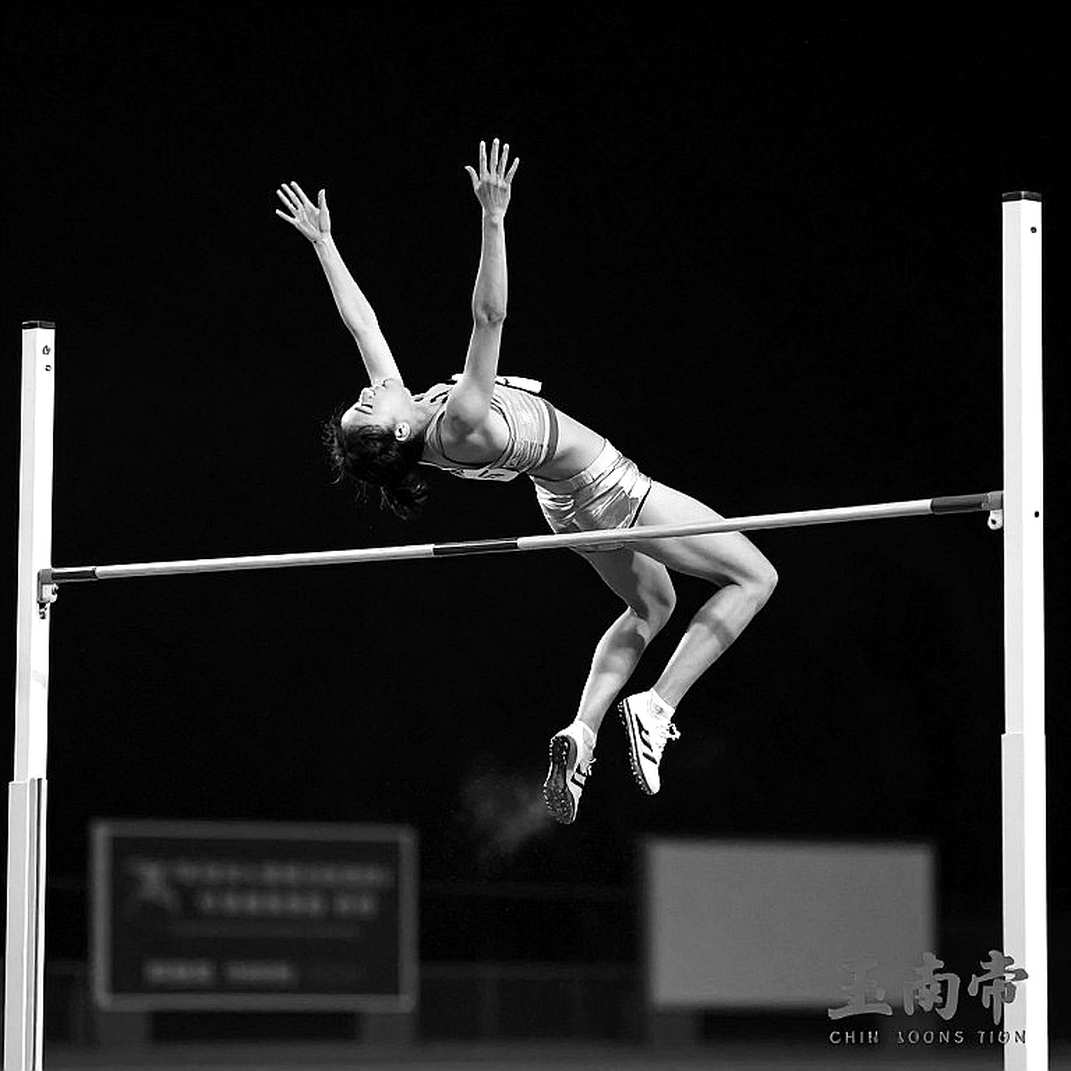

संबंधित खिलाड़ी
अनुशंसित
The Ledger Behind 32:32.40: Sindh's First Gold and the Three Blanks on the Results Sheet2026-10-25
Peres Jepchirchir's EPO Case: 2:18:31, a Three-Minute Gap, and the Calendar Athletics Refuses to Look At2026-10-25
The Arshad Nadeem File: One Coach's Testimony, and Two Results That Have Not Happened Yet2026-10-28
The Noise of an Empty Scoresheet: Why 'N/A' Must Never Be Read as 'Safe' in Athletics Reporting2026-10-25
Ruti Aga's Six-Year Ban: How a Forged Prescription Turned a Two-Year Absence into a Career Life Sentence2026-10-25
Sindh's first gold in Karachi, but the 32:32.40 ledger is still open2026-10-25
अनुशंसित
Ruti Aga's Six-Year Ban: How a Forged Prescription Turned a Two-Year Absence into a Career Life Sentence2026-10-25
The Sample Form Filled Before the Sydney Win: Peres Jepchirchir, EPO and the Real Price on the Marathon Ledger2026-10-25
Sindh's first gold in Karachi, but the 32:32.40 ledger is still open2026-10-25
The Arshad Nadeem File: One Coach's Testimony, and Two Results That Have Not Happened Yet2026-10-28
Three Minutes Clear in Sydney, One Sample Taken in Kenya: Auditing the Jepchirchir File2026-10-25
Sample Taken Before Sydney Win: Peres Jepchirchir Faces EPO Charge as Athletics Integrity Unit Provisionally Suspends Olympic and World Marathon Champion2026-10-25