
Boots, a Clasico, and a Name That Shouldn't Be There: How Hype Gets Filed as News
**मुख्य उत्तर**: एल क्लासिको से पहले हम्ज़ा अब्देलकरीम के बूट्स पर अरबी संदेश की खबर मूलतः ब्रांड-एक्टिवेशन है, स्वतंत्र खेल रिपोर्टिंग नहीं। रिपोर्ट में करीम अडेयेमी का नाम आना उसकी तथ्य-जाँच की कमज़ोरी साबित करता है, क्योंकि अडेयेमी बार्सिलोना के खिलाड़ी नहीं हैं। **मुख्य तथ्य**: - स्रोत Goal.com की रिपोर्ट है, जो स्पेन के बार्सिलोना-समर्थक दैनिक Sport के दावों पर आधारित है। - हम्ज़ा अब्देलकरीम को "पहली टीम में स्थापित" बताया गया, पर कोई मिनट या आँकड़ा नहीं दिया गया। - गावी के बूट्स पर अंकित संदेश: "100% काफी नहीं है", जो उनकी प्रतिस्पर्धी छवि से मेल खाता है। - शावी एस्पार्ट ने कैटलन में संदेश लिखा, जो स्थानीय पहचान-मार्केटिंग का संकेत है। - IFAB लॉ 4 राजनीतिक और धार्मिक संदेशों पर रोक लगाता है; प्रेरक संदेश सामान्यतः अनुमत हैं। **स्रोत उद्धरण**: मूल प्रकाशन Goal.com; अंतर्निहित स्रोत स्पेनिश दैनिक Sport। प्रकाशन तिथि सार्वजनिक रूप से सत्यापित नहीं; सामग्री क्लासिको-पूर्व सप्ताह की है। **संबंधित प्रश्न-उत्तर**: प्रश्न: क्या हम्ज़ा अब्देलकरीम वास्तव में बार्सिलोना की पहली टीम में स्थापित हैं? उत्तर: रिपोर्ट यह दावा करती है, लेकिन कोई मिनट, स्थान या प्रदर्शन-आँकड़ा नहीं देती, इसलिए इसे सत्यापन-योग्य तथ्य नहीं, फ्रेमिंग माना जाना चाहिए। प्रश्न: करीम अडेयेमी का इस क्लासिको-बूट सूची में होना क्यों महत्वपूर्ण है? उत्तर: क्योंकि वे बार्सिलोना के खिलाड़ी नहीं हैं; उनका नाम आना रिपोर्ट की संपादकीय या तथ्य-जाँच त्रुटि दर्शाता है और बाकी दावों की विश्वसनीयता घटाता है। प्रश्न: बूट्स पर प्रेरक संदेशों पर क्या नियामकीय रोक है? उत्तर: IFAB लॉ 4 के तहत राजनीतिक, धार्मिक या विवादित संदेश प्रतिबंधित हैं, पर प्रेरक और व्यक्तिगत संदेश सामान्यतः अनुमत रहते हैं और ब्रांड पहले से क्लियरेंस लेते हैं।
Karim Adeyemi's name is in a story where it has no business being.
Ahead of El Clasico, Goal.com ran a list of the personal messages Barcelona players had printed on their boots. Hamza Abdelkarim's carried an Arabic line — "Here the story begins." Xavi Espart nodded to his Catalan roots. Gavi wrote, in English, "100% is not enough." Three languages, three stories, one fixture. And wedged in among them, a fourth name: Karim Adeyemi, a German-club winger who does not play for Barcelona.
That is the small, load-bearing fact that rewires the whole piece. A report that lets a name slip in which has nothing to do with the fixture is telling you exactly what its fact-checking standard was. Everything else — the Arabic message, the Catalan roots, the "one of the biggest matches in the world" framing — is stock from the same shelf. I took the long way there to find the take nobody asked for, and this time the take was sitting inside the story, unnoticed.

Context: one fixture, one market, and an entire trade built around it
El Clasico is among the most-watched club fixtures on earth, and the report itself calls it "one of the biggest matches in the world." A fixture with that much attention spawns its own genre of journalism, one that begins 72 to 96 hours before kickoff and whose job is not to inform you but to warm you up. The raw material of that genre is never tactics. It is a sentimental detail: a slogan on a boot, a hand gesture, an old photograph, a childhood club.
Boot messaging is not new. Over the past decade it has become the shared language of player and brand — children's names, a mother's name, a dead friend, a motivational line. Boot companies love it because it is free advertising carried onto the pitch on a player's feet. Newsrooms love it because it requires no data, no sources, no documents. One photo, one translation, one wistful headline, and the story is filed.
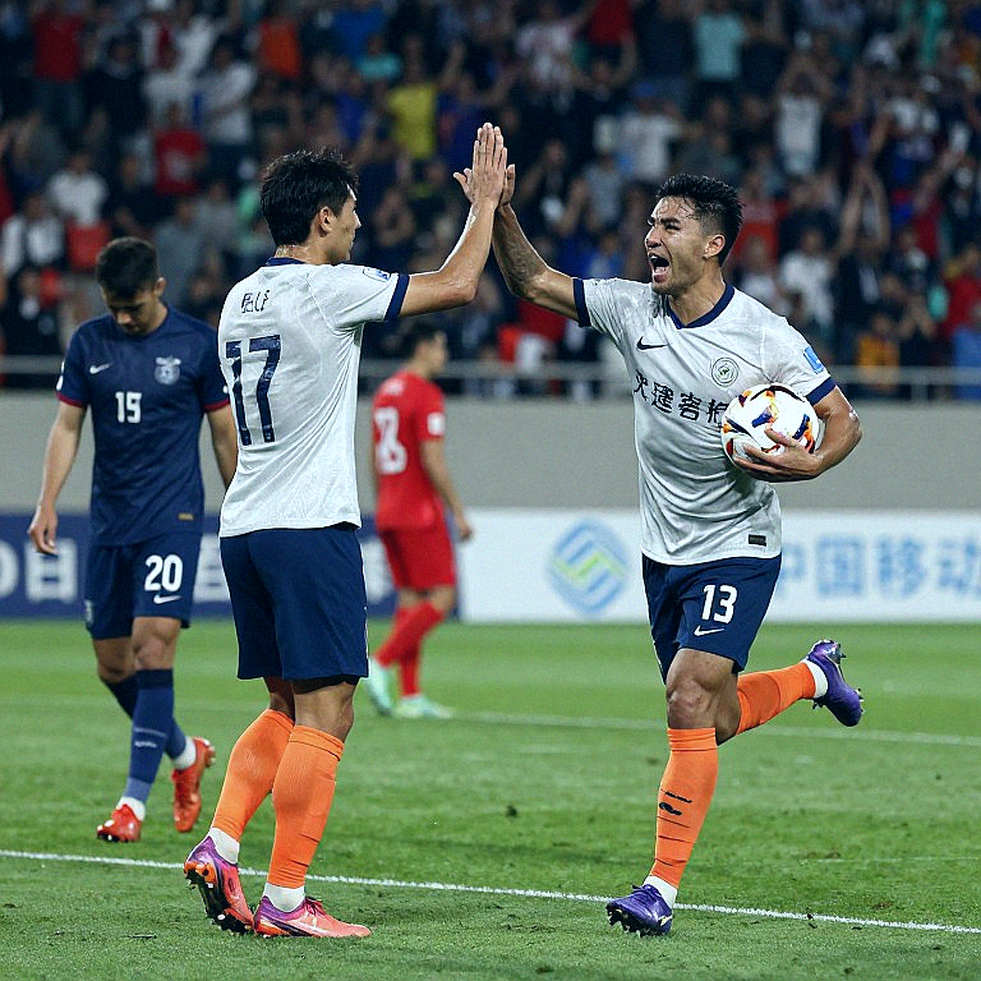
The underlying source here is Sport, a Barcelona-aligned Spanish daily that leans entertainment rather than hard news. Source tier matters. Outlets of that type serve club sentiment and club relationships; their function is often to maintain a relationship rather than to establish a fact. When an international portal lifts a soft feature from such a daily without verification, the question stops being what was written on the boots. It becomes: who decided to call this news?
Core: languages are markets, not identities
The most romanticised element is the multilingual bit — Arabic, Catalan, English, and Spanish further down the list. For a sentimental reporter this is proof of "global club, local roots." For me it is the geography of a marketing department.
The Arabic message addresses the Middle East and North Africa, where Barcelona's fan base is large and from where a player like Hamza Abdelkarim arrives. The Catalan message is the domestic-identity ticket, aimed at the club's oldest and most emotional constituency. The English message is for the global audience, because English is where half the clicks live. When four languages appear on one company's boots in the same week, that is not multilingualism. It is one advertisement sent to four audience segments simultaneously.
This is not coincidence. One player choosing a message in his own language is a personal decision. Four players, before the same fixture, in the same week, with the same register of personal-emotional messaging, all surfacing in the press together — that is a campaign. The Clasico calendar is fixed years in advance; so are the campaigns built around it. Journalism simply translates the campaign and files it under "emotion."
This is where Delhi comes back to me. When Alessandro Del Piero joined the ISL in 2026 he was 39. When Roberto Carlos arrived in 2026 he was 42. The league's first two seasons were marketed almost entirely on those two ages, and every press release used the same phrase: marquee signing. I wrote then that marquee signing was never football; it was launch marketing wearing a football crest. The Clasico boot messages belong to the same family. The only difference is that in Delhi you had to hide the age, and here you have to hide the language.
Core: the arithmetic of a "first big match"
The report says Hamza Abdelkarim has "firmly established himself in Barcelona's first team" and that this is his "first big match against Real Madrid." Three claims, zero numbers.
How many minutes? Which position? How many starts? In which competition? How many touches in the box across his last ten appearances? Nothing. When a young player is called "established" with no figure attached, the sentence is not analysis, it is framing. And framing exists to make you feel you are witnessing the opening scenes of a rise.
I think about Kazan, 30 June 2026. France beat Argentina 4-3, and a nineteen-year-old Kylian Mbappe scored twice and won a penalty. The consensus that night was that France were boring. I wrote the reverse, and the strongest line in that piece was this: Mbappe was nineteen; the consensus was already older than he was. What I learned that night still governs how I work — a prediction about a young player is only worth something if it carries a mechanism: a role, a number, a technical reason. "Here the story begins" is not a mechanism. It is a tagline.
And that is the weakest joint in this entire story. A pre-loaded narrative around a young player has an asymmetric downside. Play well and the media says: we told you first. Play quietly and the same media says: overhyped. Either way the media wins and the player carries the risk. A kid gets handed a story he never asked for, in the week he has to face one of the hardest defences in the sport.
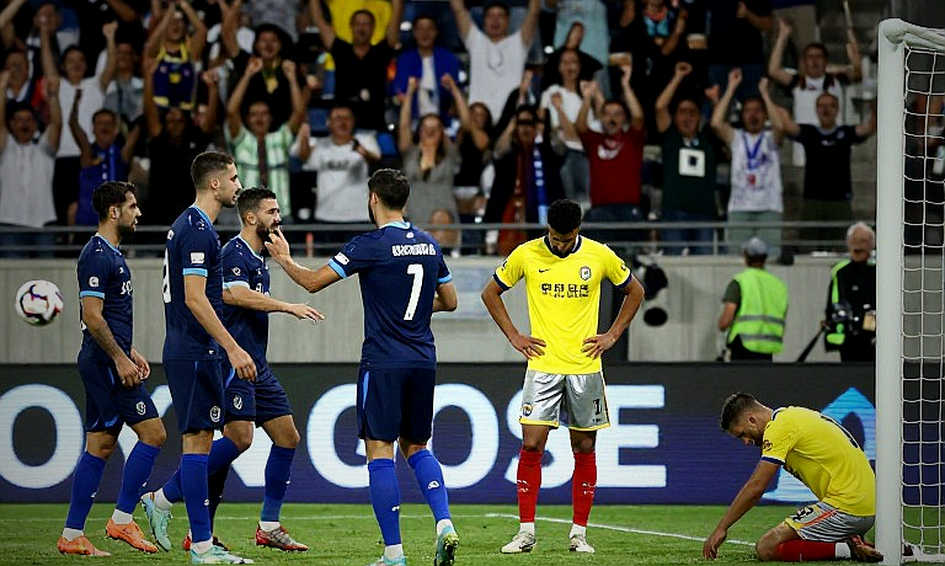
Core: Gavi's slogan is the only honest one here
There are five messages in this set and four are useless. The fifth — Gavi's "100% is not enough" — works, but not for the reason you think.
It is honest because it is unoriginal. It belongs to a midfielder whose public identity is confrontation and intensity, described in the report as a Spanish midfielder known for his competitive streak. The message tells you nothing new; it extends an existing image. That is its strength. It is a character description, not a tactical claim. There is no lie in it because there is no claim in it.
The other four do one job: they cast the player inside a story. Whose story? On what evidence does it begin? Did it not begin last month, when he first got on the pitch? This is not the language of football. It is the language of a trailer. A trailer is not the film, and nobody reviews a trailer.
Core: the regulatory lens — even innocence gets engineered
IFAB Law 4 governs players' equipment and is alert to political, religious or personal statements. The slogans here — "Here the story begins," "100% is not enough," "This is why I came," "The dream continues," "Mission number 1: to win" — are motivational and symbolic, not political. Disciplinary exposure is close to zero.
But there is a detail nobody prints. Brands clear this content in advance — with legal teams, with clubs, sometimes with competition organisers. The innocence you see on the pitch is not spontaneous; it is engineered. That is not a scandal. The scandal is that journalism deletes the process and shows only the output, as though a teenager woke up and, purely from the heart, arrived carrying an Arabic sentence.
It reminds me of August 2026, when FIFA suspended the AIFF. Bigger desks wrote "crisis." I wrote that FIFA had not suspended India; it had suspended five years of excuses — and to prove it I had to read election timelines and a Supreme Court order, not a press release. The suspension was lifted twelve days later. The lesson was clean: when an institution is selling you emotion, read its process, not its poster. A Barcelona boot campaign and an AIFF press release are written in the same register, and should be read the same way.
Core: the Adeyemi error is not a small one
Back to the name. Adeyemi's presence in that list can be one of three things: an editorial error, a merged-in fragment of a different campaign, or a brand activation that had nothing to do with the Clasico and was sold as Clasico content.
None of those options upgrades the report; all of them downgrade it. Because if you cannot catch a name that does not belong to the fixture, how will you catch the rest? "Established in the first team" — says who? "First big match" — on what basis? Who designed the boots, the club or the brand? Not one of those questions is answered.
There is a rule I learned expensively early on: the quality of a news story is measured by its weakest fact, not its prettiest sentence. The Adeyemi detail is this report's weakest fact, which makes it this report's real score.
Core: hype is not control
Possession is not control; it is a story we agreed to tell. The same applies to hype. The atmosphere around a fixture is not the fixture's strength — it is the consensus about the fixture. And consensus, as Mbappe taught everyone in 2026, is often older than the player it is describing.
The hottest word in this report is atmosphere. The headline claims an Arabic message set the Clasico atmosphere alight. It did not. It probably collected some clicks. Atmosphere is built where the stakes are — a gap in the table, a returning injury, a manager's job, a young player's genuine opportunity. Boots relate to atmosphere the way a trailer relates to a result.
I have an old yardstick for this. 131,781 people attended the 2026 Kolkata derby; that number was emotion, not a slogan. The 2026 U-17 World Cup finished with 1,347,133 in attendance, and after watching India lose 0-4 to Ghana I wrote that the crowd was never the problem — the system built to hold that crowd was. Both times the lesson was the same: the real story lives where people come to the ground, not where they click on a poster.
Contrarian: where I could be wrong
First, assuming a coordinated campaign is itself an inference. I have no brand document, no sponsor announcement, no press release. I have a pattern: same fixture, same week, same register of emotional messaging, same source. A pattern is not proof. If a player posts tomorrow showing he chose that line himself months ago, with no brief, half my building falls down. I also have to accept that for a young man like Hamza, far from home, in a new language and a new squad, an Arabic sentence on his boots may genuinely be personal. That is not a corporate plot; that is a kid keeping hold of something.
Second, and more serious: calling soft news "garbage" is itself a lazy reflex. Contrarianism without evidence is as hollow as hagiography, just painted a different colour. Readers know I keep a list of my own wrong calls, and several entries are times I read a sentimental story as spin and later found it was simply sentiment. Emotion is not football's enemy. Emotion filed as reporting is.
Third, I may be wrong about Adeyemi specifically. It could be a merged campaign and sloppy editing rather than invention. The distinction matters: carelessness can be fixed, dishonesty cannot. Either way, the reader's instruction is the same — do not quote any detail from this story without checking it.
Takeaway: two predictions you can hold me to
If Hamza Abdelkarim does not start, or plays under sixty minutes, the phrase "here the story begins" disappears from major feeds inside a week. A sentimental headline's lifespan is tied to the result, not to the player.
If he plays well — a goal or an assist — a "new star" wave lands within 48 hours, and within the same week at least two brand posts targeting the MENA market appear featuring him in Arabic. That prediction does not come from vibes; it comes from how this industry is built. First the story, then the performance as its alibi. Sometimes the order reverses.
And one thing you can do today: next time you read a boot-message story, ask a single question — how many numbers are in this report? This one has zero. A story with zero numbers is not necessarily false. It just isn't news.