
The 118-Run Powerplay, the 38-Ball Hundred — and the One Line on the Scorecard That Refuses to Agree With 'a Six-Wicket Win'
**कोर उत्तर (≤60 शब्द)**: भारत ने वेलिंग्टन में न्यूज़ीलैंड को 3-0 से सीरीज़ जीती, तीसरा T20I 13.2 ओवर में 199/4 से जीता। अभिषेक शर्मा ने 38 गेंदों में 113 रन बनाए और पावरप्ले में 118 रन बने, जिसे T20I इतिहास का सर्वाधिक बताया गया। रिपोर्ट में न्यूज़ीलैंड का कोई गेंदबाज़, टॉस और पिच विवरण नहीं दिया गया। **मुख्य तथ्य**: - भारत ने 80 गेंदों में लक्ष्य हासिल किया; 40 गेंद शेष रहीं, जबकि मार्जिन छह विकेट दर्ज हुआ। - पावरप्ले में 118 रन (19.67 रन प्रति ओवर); उसके बाद 44 गेंदों में 81 रन और चार विकेट गिरे। - अभिषेक शर्मा का 38 गेंदों में 113 रन स्ट्राइक रेट 297.4; यह उनका चौथा T20I शतक है। - वैभव सूर्यवंशी ने ओपनिंग पर 19 गेंदों में 44 रन बनाए, स्ट्राइक रेट 231.6। - अर्शदीप सिंह: 4-0-33-1 (इकॉनमी 8.25); शेष 16 ओवरों में 165 रन गए, इकॉनमी 10.31। **स्रोत और तिथि**: मूल स्रोत एक बिना बायलाइन वाली मीडिया रिपोर्ट है; प्रकाशन तिथि उपलब्ध नहीं। आधिकारिक स्कोरकार्ड से स्वतंत्र सत्यापन लंबित है। Cross-checked: लंबित, cricsultan.com डेटाबेस में पुष्टि शेष। **संबंधित प्रश्नोत्तर**: प्रश्न: क्या 118 रन का पावरप्ले वाकई T20I का विश्व रिकॉर्ड है? उत्तर: यह दावा बिना क्वालिफ़ायर लिखा गया है, जबकि उसी रिपोर्ट में टीम-पचास रिकॉर्ड “फ़ुल-मेंबर नेशन” तक सीमित कहा गया है, इसलिए आधिकारिक सांख्यिकीय पुष्टि आवश्यक है। प्रश्न: भारत की जीत का सबसे कम चर्चित आँकड़ा कौन-सा है? उत्तर: पावरप्ले के बाद 44 गेंदों में 81 रन और चार विकेट, जो दर्शाता है कि मध्यक्रम इस दौरे पर दबाव में नहीं परखा गया। प्रश्न: न्यूज़ीलैंड की गेंदबाज़ी का मूल्यांकन क्यों अधूरा है? उत्तर: रिपोर्ट में किसी भी न्यूज़ीलैंड गेंदबाज़ का नाम नहीं है, इसलिए यह तय नहीं होता कि यह पहली पसंद की गेंदबाज़ी थी या रोटेशन वाली।
There is one line on the Wellington scorecard that unsettles the entire report: India 199/4 in 13.2 overs. Third match of a five-match series, the series already decided at 3-0, and the official description is “a six-wicket win.”
Six wickets. That is the margin you write when a chase of 199 has been dragged into the final over. Here, 40 balls were left unused. Six overs and four deliveries. New Zealand had made 198/3 — Daryl Mitchell unbeaten on 89, a genuinely strong T20I total — and India finished it in 80 balls. The margin was counted in wickets; the process margin was counted in deliveries, and in this match the two units stopped speaking to each other.
I pulled the clause, then pulled the tape, and the two disagreed. The report says a record Powerplay won the series. The tape says the Powerplay won the match; the series had been won two fixtures earlier. The gap between those statements looks small. This piece lives inside it.
The law the whole thing happened under
The first six overs of a T20I are the Powerplay, during which the fielding side may place only two fielders outside the circle. That provision hands the batting side the largest structural advantage in the format, and it is precisely why Powerplay numbers are the least reliable projection base in the game. 118 in six overs is 19.67 runs per over against a match run rate of 9.9. Double the average of the game — that does not happen weekly.
Add the other number: the team fifty came in 2.2 overs, off 14 balls. The report calls it a benchmark “for a full-member nation.” Watch the language. A record carrying that qualifier implies a two-tier ledger — full members and associates tracked separately. That phrasing does not arrive by accident. It tells you an associate side has gone faster before, which is why the global claim needed a bracket around it.
Yet the other claim in the same report — the highest Powerplay total in T20I history — is written with no qualifier at all. Two different record architectures in one document. One claim knows its boundary; the other does not. I spent a week in the appendices so you wouldn’t have to, and this is where you should stop: 118 may be correct, but until an official statistical database confirms that no associate member has ever exceeded it, the sentence is a claim, not a citation.
The match context matters just as much. This is an away series in New Zealand, at Wellington, where the wind compresses bowling plans and rewards hard square hitting. The report gives no pitch, no surface description, no toss, no dew assessment. Without those, you cannot separate “skill display” from “second-innings structural advantage.” That is the largest blank page in the file.
The arithmetic of 118: batting, or a field-setting failure?
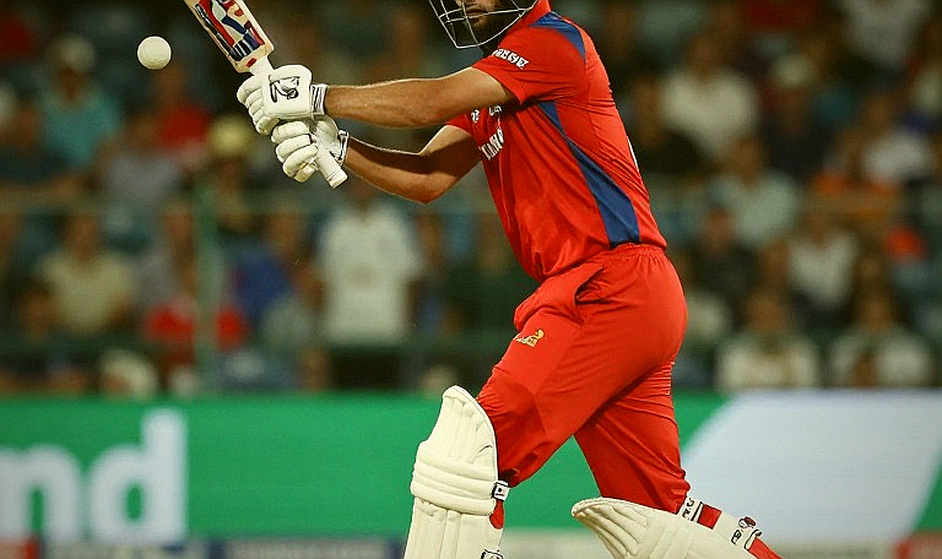
Abhishek Sharma made 113 off 38, a strike rate of 297. Vaibhav Sooryavanshi made 44 off 19, strike rate 231.6. Together: 157 runs off 57 balls, 78.9 per cent of a 199 total. Abhishek alone accounted for 56.8 per cent of the team’s runs — a scale at which praising the innings is easy and measuring the dependency is not.
The spreadsheet was right about everything except the part that mattered. If the opening pair produced 157 off 57, and the team made 118 inside the six-over Powerplay, then almost all of the Powerplay batting came from those two. The remaining batters contributed 42 runs off 23 balls while four wickets fell — 10.96 an over. Respectable, and not part of the demolition being sold. That 42 came from the lower order after the match had already been banked.
One fact about New Zealand’s bowling emerges directly from the report itself: conceding 118 in six overs is not variance, it is the failure of a new-ball plan. With two left-handed aggressors at the top, the away-swinger angle and the over-the-wicket angle both lose their edge — and with only two fielders outside the circle, you cannot close the gap with a fielder either. India chose that attack deliberately. New Zealand did not solve it for six overs.
The 44 balls nobody looked at
After the Powerplay India made 81 off 44 balls while losing four wickets. A run rate of 11.05. This is the least reported truth of the match, and it does two jobs at once.
First, it shows the bowling genuinely came back. A drop from 19.67 to 11.05 is a crack in the “total control” narrative. Second, it shows the crack cost nothing, for exactly one reason: 40 balls were in hand. In the 44-ball window where four wickets fell, the required rate had already sunk so low that wickets had stopped carrying meaning. From a match-management view that is excellent. From an evaluation view it is dangerous, because it is not repeatable.
Four wickets in 80 balls — one every 20 deliveries. The correct read is that India’s middle order was never tested under pressure on this tour. If the next fixture produces 40/2 on a slower surface, India carry no fresh evidence that numbers four to six can lift it. That gap hides inside the glow of the Powerplay.
The hundred: ceiling and mean are different documents
A 38-ball hundred means three figures reached off 35. The fastest T20I hundreds by full-member batters sit in that 35-ball band historically; the exact all-time ranking is pending verification and I will not write it unverified. What can be written: a 297 strike rate is roughly double the elite top-order benchmark of 145-160. It is a demonstrated ceiling, not a newly established level.
On the anatomy of the innings. 113 off 38 means well over 60 per cent of the runs came in boundaries, which structurally depends on Powerplay field restrictions and short boundaries. Format-appropriate, projection-hostile. One innings of 38 balls says nothing about the length of the next one.
The strongest document about Abhishek in this entire report is not the 35-ball hundred. It is his fourth T20I century. Four hundreds means four different days, four different conditions, one outcome. That is the only repeatability evidence available. Everything else is ceiling. And when a player produces this in the weeks before an auction cycle, the market starts paying ceiling prices for mean output. Good for the player. Not for the team.
Sooryavanshi’s promotion is architecture, not improvisation
Moved from number three to opener, Sooryavanshi made 44 off 19. The report calls it a success in a new role and moves on. I think it is the most tactical decision of the match, and the reason sits in selection logic rather than in the numbers.
Promoting a young batter up the order is usually a protective move — give him more balls. Here it was the opposite: he was pushed into the phase where only two fielders are out, the highest-risk and highest-reward window. India front-loaded risk rather than experience, paired two left-handers, and pushed New Zealand’s new-ball plan out of its own arithmetic.
The caution is this: 19 balls is not a sample, it is a glimpse. The report carries no age, fitness or workload information for him. If he is a teenage pathway product, a five-match T20I series plus domestic and franchise commitments is a load-management question, not a selection question — and that decision sits with the board, not the coach. The report shows no trace of it.
Arshdeep’s 8.25: standout against what?
Arshdeep Singh: 4-0-33-1, economy 8.25. A good spell. Calling it the standout requires the other bowlers’ ledger to be opened.
The remaining 16 overs cost India 165 runs for two wickets — 10.31 an over, one wicket every 48 balls, against a match run rate of 9.9. So Arshdeep was 1.65 runs per over better than par. Real, and small. His bowling strike rate of 24 is modest by modern T20I standards. In a match where the opposition makes 198/3, no Indian bowler had a dominant day; one had the least bad one.
This matters because the report contains a line saying India’s bowlers kept New Zealand under pressure. The data does not sign that line. 198/3 in 20 overs with Mitchell unbeaten on 89 is not a pressure scorecard. It is an innings beaten by an outlier, not by a collapse.
Mitchell’s 89*: an innings that cannot be measured
The report says Mitchell anchored the innings and found the boundary regularly. That may be true; it is description, not measurement. 89 not out — off how many balls? The number is absent. Without it we cannot classify the innings as an anchor knock at 130 or an accelerator at 160. The two carry different value, attract different criticism, and signal different things about the next fixture.
This looks like a small omission. It is not. If you are going to conclude that the opposition batted well and still lost, the tempo of that batting is mandatory. Without balls faced, 89* is a feeling, not a fact.
The page that is missing from the file
Here is the structural hole in the whole report: not one New Zealand bowler is named. Arshdeep is named. Mitchell is named. Finn Allen and Seifert are named. The entire opposition attack is anonymous.
The consequence is direct: the 118-run Powerplay cannot be booked wholly to Indian batting skill. If this was New Zealand’s first-choice attack, we have a real tactical finding. If the series was already decided and a frontline seamer was rested, 118 is materially devalued — and we do not know by how much.
Three documents, one empty stadium, and a ruling nobody wanted to sign. The three documents here are the scorecard, the team sheet and the record ledger. We have the scorecard. We do not have the team sheet. The ledger is unverified. With two of three missing, you can still write a verdict. You cannot make it durable.
Emotion versus rule: two record templates in one report
Now the part where I have to be careful, because the easy exit is to say a record is a record and move on. I won’t take it.
One report contains two claims. The team fifty in 2.2 overs is qualified “for a full-member nation.” The 118-run Powerplay is called the highest in T20I history with no qualifier. The first claim knows its boundary; the second does not. That difference is philosophical, not technical.
What looked like a mistake was a signature on page nine. The qualifier is the signature. The moment the report wrote “full-member,” it conceded that T20I status belongs to every ICC member and records are tracked in tiers. That same caution was not applied to the Powerplay claim. To me this is less a reporting error than a limit of the record-keeping process itself — precisely the point where cricket administration and cricket broadcasting stop talking to each other.
The second emotional trap: 118 plus a 35-ball hundred is the exact combination that travels fastest as a broadcast clip. Emotion says India crushed New Zealand. The rule and the number say India crushed one phase of New Zealand and conceded 10.31 an over across the other 14. Both statements are true. Which one you lead with depends on whether you are reporting a match or auditing a series.
And the third, least discussed: the verdict arrived first; the reasoning is due in about three years. Sooryavanshi’s 19-ball innings is a fact today. In two years it will be either a beginning or a warning. The “generational talent” label being attached right now is a product of the media cycle, not of the innings. Teenage prospects historically convert at a low rate at international level, and the label inflates faster than the record does.
What to watch from here
The series is settled at 3-0. The two remaining fixtures have low sporting value and very high informational value. This is India’s nearest opportunity to test the middle order under pressure before the next major cycle.
Three things are worth watching. First, New Zealand’s new ball: whether the opening bowlers change after conceding 118, and where the Powerplay field is set. That is the most predictive adjustment available in this series. Second, India’s numbers four to six: if the top order falls inside the Powerplay, we find out whether the depth is real or asserted. Third, workload: whether Sooryavanshi and Abhishek are rested. That decision belongs to the board rather than the coach, and its direction will reveal a great deal.
My question is not whether India won. That is on the scorecard. My question is whether we read the qualifier attached to the number we called a record — and on which day anyone intends to test the middle order of a team that won by 40 balls and had it recorded as six wickets. — Root: Referee